Hilltop Landscaping
What Is the Strongest Type of Retaining Wall for Colorado Yards?
Poured concrete retaining walls are the strongest option for Colorado yards. They handle the highest lateral soil pressure, resist freeze-thaw damage, and last decades with minimal maintenance. For walls over 4 feet tall or those holding back significant slopes, poured concrete with steel reinforcement is the most structurally sound choice.
Cantilever walls (an L-shaped or T-shaped poured concrete design) are the strongest variation—they use leverage from a buried footing to resist soil pressure more efficiently than straight gravity walls. For most residential projects under 4 feet, segmental concrete block walls provide excellent strength at lower cost.
The “strongest” wall isn’t always the right wall. Colorado yards face specific challenges—freeze-thaw cycles, expansive clay soils, and drainage from snowmelt—that require the right combination of strength, flexibility, and drainage design. A wall that’s overbuilt for your situation wastes money; one that’s underbuilt will fail.
At Hilltop Landscaping, we’ve built retaining walls across Brighton and the Denver metro area for over 15 years. Here’s how the main options compare and when each makes sense.
Get A Free Estimate
Retaining Wall Types Ranked by Strength
Poured concrete (cantilever design) – Maximum strength for tall walls and heavy loads. Steel-reinforced concrete with an L or T-shaped footing uses the weight of the soil above the footing to resist lateral pressure. Best for walls over 4 feet or where soil pressure is significant. Requires professional engineering for walls over certain heights. Highest cost but longest lifespan.
Poured concrete (gravity design) – Relies on mass and weight to hold back soil. Very strong but requires more material than cantilever designs for the same height. Better suited for shorter walls where you want maximum durability.
Segmental concrete block (with geogrid) – Interlocking concrete blocks reinforced with geogrid layers buried in the backfill. Strong enough for most residential applications up to 6+ feet when properly engineered. More affordable than poured concrete. Handles freeze-thaw well and allows some flexibility.
Segmental concrete block (gravity) – Unreinforced block walls that rely on weight and setback. Suitable for walls under 3-4 feet. Good strength for garden walls, raised beds, and minor grade changes.
Natural stone/boulder – Varies widely based on stone size and installation method. Large boulders can be very strong for certain applications. Smaller stacked stone is better for decorative walls under 3 feet.
Wood/timber – Weakest option. Suitable only for short-term garden borders or low walls under 2 feet. Wood deteriorates in Colorado’s climate and provides minimal structural strength.
Strength Comparison
Wall Type | Max Practical Height | Relative Strength | Best For |
Poured concrete (cantilever) | 10+ feet | Highest | Tall walls, heavy loads |
Poured concrete (gravity) | 6 feet | Very High | Shorter walls, maximum durability |
Concrete block + geogrid | 6+ feet | High | Most residential projects |
Concrete block (gravity) | 3-4 feet | Moderate | Garden walls, small grade changes |
Natural stone/boulder | 4 feet | Moderate | Natural aesthetics |
Wood/timber | 2 feet | Low | Temporary, decorative only |
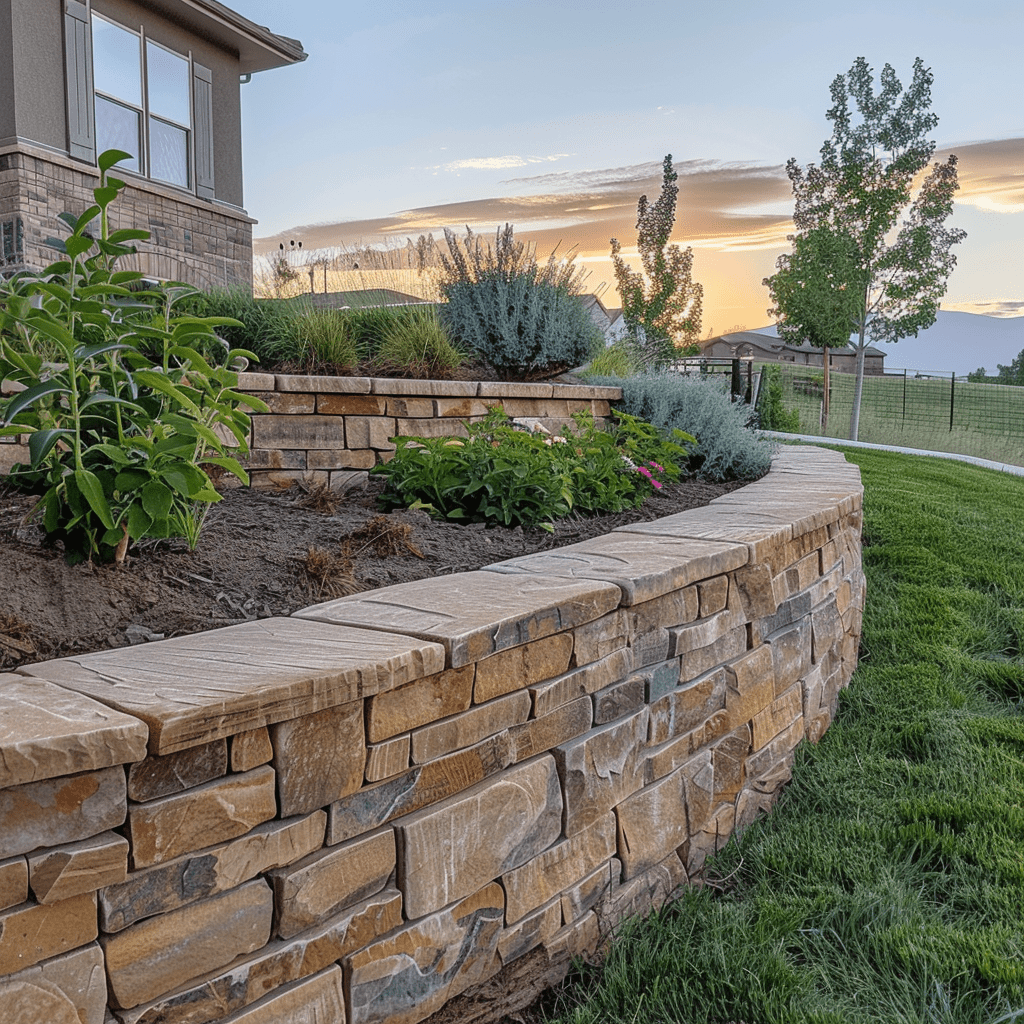
What Makes a Retaining Wall Strong Enough for Colorado
Strength alone doesn’t guarantee performance in Colorado. These factors determine whether your wall will last:
- Proper drainage – Water buildup behind a wall creates hydrostatic pressure that can push over even strong walls. Drainage gravel and perforated pipe behind the wall are essential, not optional.
- Adequate footing depth – Footings must extend below the frost line (typically 30-36 inches in the Denver metro area) to prevent heaving. Shallow footings will shift and crack during freeze-thaw cycles.
- Soil assessment – Colorado’s expansive clay soils exert more pressure than sandy or loamy soils. Walls in clay need to be designed for higher loads than the same wall in better soil.
- Setback/batter – Walls that lean slightly back into the slope (called batter) are more stable than perfectly vertical walls. Most segmental block systems have built-in setback.
- Deadmen or geogrids – Anchors that extend back into the slope tie the wall to stable soil. Required for taller walls and highly recommended for any wall over 3 feet.
When You Need Maximum Strength (and When You Don't)
Not every wall needs to be the strongest possible. Match the wall type to your actual situation:
You need maximum strength when:
- Wall height exceeds 4 feet
- Retaining a driveway, structure, or other heavy load
- Slope is steep or soil is saturated
- Clay soil with high expansion potential
- Wall failure would cause significant property damage
You can use moderate-strength options when:
- Wall is under 3 feet for landscaping purposes
- Retaining garden beds or creating planting terraces
- Soil drains well and slope is gentle
- Aesthetics matter more than holding back heavy loads
Many homeowners overbuild low garden walls with expensive poured concrete when segmental block would work fine. Others underbuild tall structural walls with cheap materials and pay for rebuilds within a few years.
How We Approach Retaining Wall Projects in Brighton
Every hardscaping project in Brighton starts with understanding what you’re actually trying to retain. We look at the height needed, slope grade, soil type, drainage patterns, and what’s above the wall (lawn, driveway, structure).
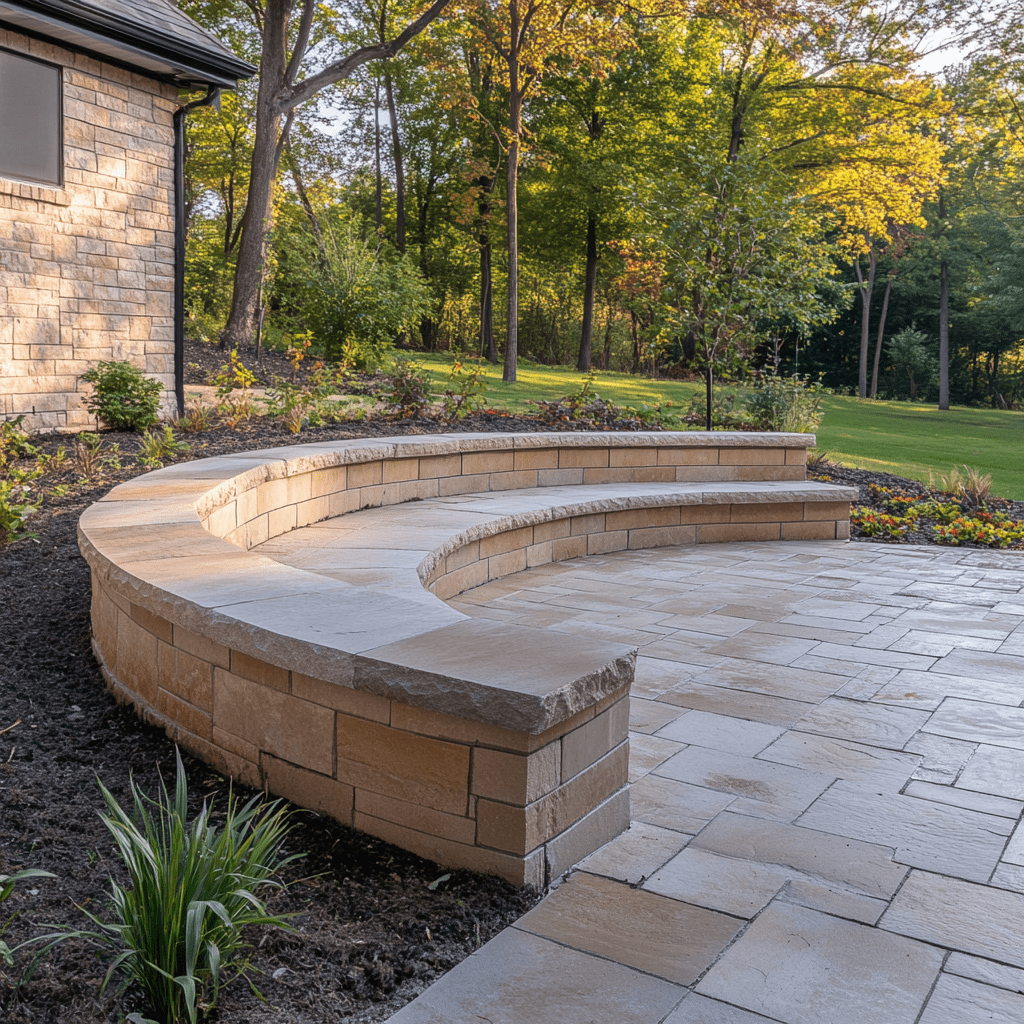
For most residential walls under 4 feet, we recommend segmental concrete block with proper drainage. It provides excellent strength, handles freeze-thaw cycles well, and costs less than poured concrete. The interlocking design also allows slight movement without cracking—important in Colorado’s expansive soils.
For taller walls or those supporting structures, we work with engineers to design poured concrete or geogrid-reinforced systems that meet load requirements. We also handle permits when required—most Colorado municipalities require permits for walls over 4 feet.
Need more help?
Get a Professional Assessment
Retaining wall strength requirements depend on your specific site conditions. What works for your neighbor’s yard may not work for yours if soil type, drainage, or slope differs.
Hilltop Landscaping offers free consultations where we evaluate your site, discuss your goals, and recommend wall types that fit your needs and budget. We serve Brighton, Thornton, Commerce City, Westminster, and the entire Denver metro area.
Connect directly with our landscape design experts at (720) 380-0087
Request a consultation at hilltoplandscapesco@gmail.com for your dream outdoor space.
Message us through our website for immediate responses during business hours.