
Do You Need a Permit for a Retaining Wall in Brighton, CO?
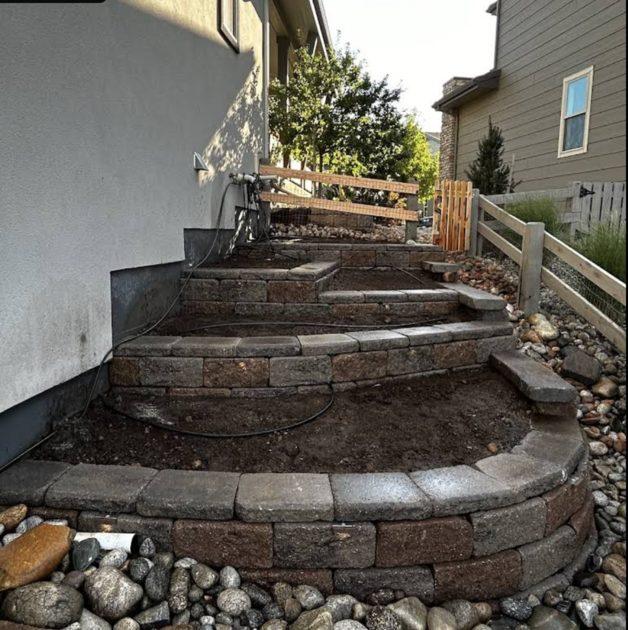
In Brighton, a retaining wall over 4 feet tall requires a building permit and engineered stamped drawings. No permit is required for low decorative walls under 24 inches with no load above them. Everything in between depends on two factors: height and surcharge.
If there is any doubt about whether your project crosses the threshold, a quick call to Brighton’s Building Permit Counter gives you a definitive answer before any work starts.
You Need a Permit When Your Wall Is Over 4 Feet Tall
The 4-foot threshold is measured from the base of the footing to the top of the wall, not from grade. That distinction matters because the footing is buried. A wall that looks 3 feet above ground can easily be a 4-foot-plus structure once the footing depth is included.
Situation | Permit Required? |
Wall over 4 feet tall (measured from footing base to top) | Yes — engineered stamped drawings required |
Wall supports surcharge — driveway, deck, structure or sloped backfill | Yes — licensed engineer review required |
Tiered walls with less than 2× spacing between them | Yes — treated as a single combined structure |
Decorative wall under 24 inches, no surcharge, not tiered | No permit required |
Once a wall crosses that threshold in Brighton, the permit application requires engineered stamped drawings. Four calculations must be covered:
- Bearing capacity
- Overturning resistance
- Sliding resistance
- Overall stability
Hilltop coordinates the licensed engineer when this is part of the project scope. The permit is submitted to Brighton’s Building Permit Counter, which handles projects within city limits.
Four calculations required with every stamped drawing submission: • Bearing capacity • Overturning resistance • Sliding resistance • Overall stability |
You Need a Permit When the Wall Supports Surcharge
Surcharge is any load above the wall that adds lateral pressure: a driveway, a building, a deck or sloped backfill. Even a short wall can require a permit if surcharge is present. If the slope situation is borderline, the prior question is often to decide between a wall and regrading before the permit question comes up.
The general rule: surcharge must be located at a horizontal distance of at least 2 times the wall height from the back of the wall to avoid being classified as a load. A wall 3 feet tall with a driveway 4 feet behind it falls within that zone and typically requires review. Three situations come up most often in Brighton:
- A wall built along a driveway edge
- A wall near a home’s foundation
- A wall where the neighbor’s yard sits higher than the property
Tiered Walls Count as One Wall
This is the detail that catches most homeowners. Two walls of 3 feet stacked close together do not each qualify as independent 3-foot walls. If the horizontal distance between them is less than twice the height of the lower wall, the county treats them as a single combined structure.
How spacing determines classification:
Configuration | Spacing | How It’s Counted |
Two 3-ft walls | 4 ft apart | Single 6-ft wall (permit required) |
Two 3-ft walls | 6+ ft apart | Two independent walls |
Building short walls close together to avoid the permit threshold does not work and is flagged during inspection.
You Don’t Need a Permit for Low Decorative Walls
Walls under 24 inches that are free-standing, carry no surcharge and are not part of a tiered system generally fall outside the permit threshold. Garden borders, low planters and decorative stone features along a bed edge are typical examples.
Borderline projects are worth a quick confirmation call before starting. If there is any indirect surcharge from sloped ground or adjacent structures, the “under 24 inches” rule may not apply cleanly.
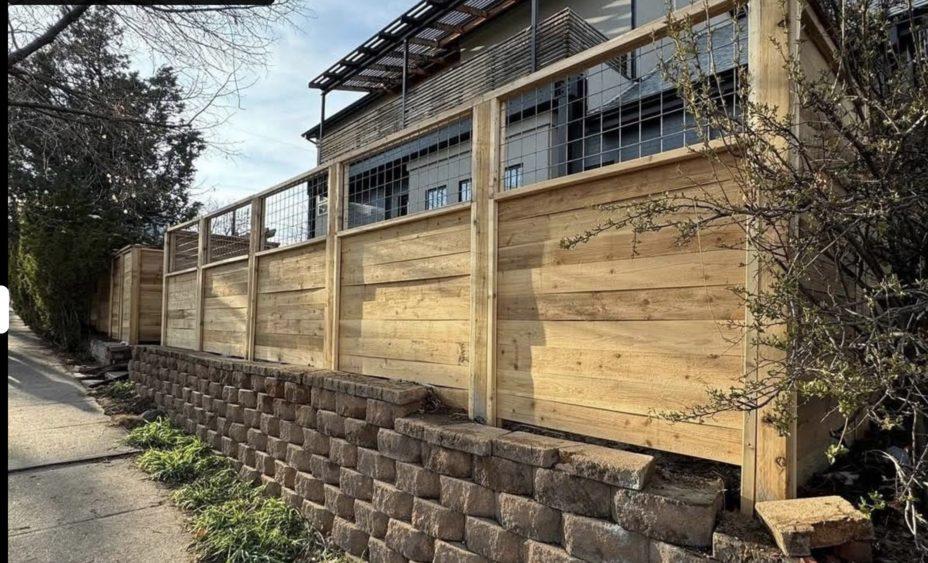
If You’re Not Sure, Call Before You Dig
Brighton’s Building Permit Counter handles questions about whether a specific project requires a permit. A quick call before any excavation saves a much harder conversation after the fact.
Brighton straddles two counties. Your exact address determines which jurisdiction applies; the Building Permit Counter confirms this before you submit anything.
Separate from the city permit, Colorado state law requires notifying the utility to locate service at least 3 business days before any excavation, regardless of permit status. This applies to every project.
Required before every excavation in Colorado: Notify Colorado 811 (utility locate service) at least 3 business days before any digging — regardless of permit status or project size. |
How Hilltop Handles the Permit When It’s Part of the Project
When a Hilltop project requires a permit, the process is included in the scope. The site plan is prepared, the licensed engineer is coordinated for stamped drawings, the application is submitted to the appropriate county, inspections are scheduled and the sign-off is delivered before the project closes.
What Hilltop includes when a permit is required: • Site plan preparation • Licensed engineer coordination — stamped drawings • Permit application to Brighton or Adams County • Inspection scheduling • Written sign-off delivered before project close |
The free on-site assessment covers whether the wall requires a permit. That determination is made based on actual measurements, not estimates. Full details on how professional retaining wall installation in Brighton works, including permit coordination, drainage and timeline. Call (720) 380-0087 or email hilltoplandscapesco@gmail.com to schedule.