
Signs Your Retaining Wall Is Failing in Brighton, CO
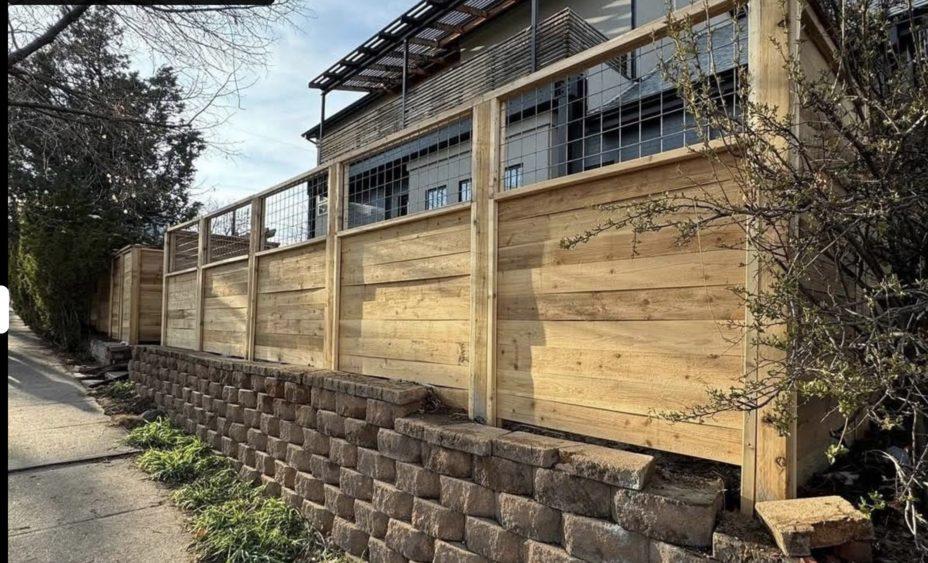
The difference between structural failure and cosmetic damage is movement, not crack size. A wall that is leaning, showing horizontal cracking or pushing soil to the front face is failing actively. A wall with hairline surface cracks and no movement, no soil migration and no water pooling behind the cap is cosmetic.
What each sign tells you at a glance:
Sign | Category | Action |
Horizontal cracking across the face | Structural | Assess before next rain or snowmelt |
Forward lean, bow or bulge | Structural | Force is still active, do not delay |
Gap at the base | Structural | Footing compromised, needs assessment |
Soil showing on the front face | Structural | Evaluate drainage alongside structure |
Water pooling behind the cap | Structural | High urgency by next freeze season |
Rot or softness at base of railroad tie | Structural | Replacement, not repair |
Hairline surface cracks, no movement | Cosmetic | Monitor, no immediate action |
Horizontal Cracking Across the Face of the Wall
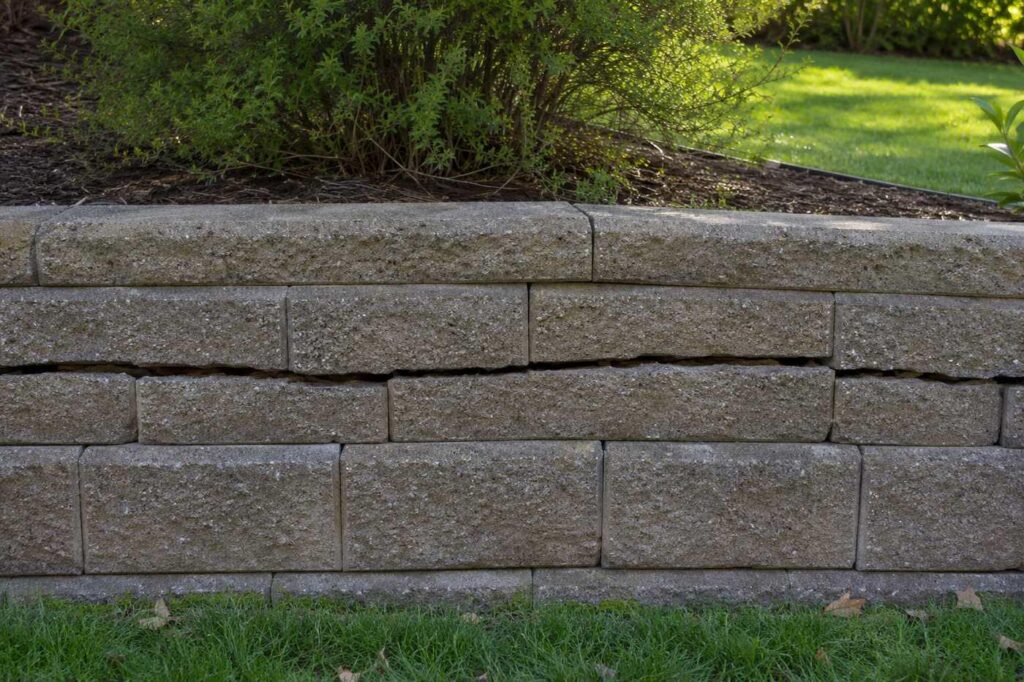
A crack running horizontally across the face, typically at mid-height or two-thirds up, means the wall is bending under lateral pressure. The force is coming from behind: either hydrostatic pressure from water with no outlet, or soil pressure that has exceeded what the wall was designed to hold.
This is an active failure. It does not stabilize on its own. In Brighton, the most common cause is drainage failure that has been building through multiple freeze-thaw cycles. Once horizontal cracking appears, the wall needs a professional assessment before the next heavy rain or snowmelt.
A Forward Lean, Bow or Bulge in the Wall
Place a level against the face. Any deviation from plumb, even one to two inches across the length of the wall, is significant movement. A wall pushed forward by retained soil is not a cosmetic issue. The force that created the lean is still there, and it continues working.
Moderate lean with an intact base and functional drainage can sometimes be corrected with tie-back anchors. Severe lean with a shifted base or visible cracking at the footing means the section needs replacement. The on-site assessment determines which situation applies.
A Gap at the Base of the Wall
A space between the bottom of the wall and the adjacent ground or paving that was not there before means the wall has settled or kicked forward. The footing is no longer in full contact with the bearing surface.
The most common cause in Brighton is frost heave. When the footing is not set below the frost line, freeze-thaw cycles lift and shift the base over time. Once the base moves, the entire wall is compromised. This requires assessment before adding any load above the wall.
Soil Showing Up on the Front Face of the Wall
Soil appearing on the front side of the wall, below the cap or through joints, means containment is failing. The wall is no longer holding the material it was built to retain.
Volume matters here. Small amounts of fine material through joints may indicate filter fabric degradation. Larger soil migration through or around the wall ends is active containment failure. Either way, the drainage system behind the wall needs evaluation alongside the structural condition.
Water Pooling or Freezing Behind the Wall Cap
Standing water on the surface behind the top of the wall after rain, or visible ice in the same area in winter, means the drainage system is not moving water out. Water is accumulating instead of flowing down through the gravel backfill and out through the perforated pipe at the base.
This sign is moderate urgency now and high urgency within one to two seasons. Water sitting behind the wall applies hydrostatic pressure every time it rains. In Colorado, that water freezes, expands and applies additional force with every cycle. Horizontal cracking is the typical result. The drainage system needs to be evaluated and cleared before the next freeze season.
Rot or Softness at the Base of a Railroad Tie Wall
Press on the wood near the base. Softness, spongy texture or visible rot means the wall is losing structural integrity from the ground up. Railroad tie walls in Brighton’s alkaline clay soil degrade faster than in most climates. Once rot is established at the base, it moves quickly.
The wall needs replacement, not repair. Patching rotted ties does not restore the base capacity. Replacement with concrete segmental block or natural stone resolves the underlying problem permanently. If the wall supports a driveway or sits over 4 feet, permit requirements apply to the replacement project.
Hairline Surface Cracks Without Movement Are Cosmetic
Thin cracks in the face of the wall with no displacement, no widening over time and no other signs present are surface stress relief. They do not indicate structural failure.
Monitor them. Take a photo with a reference point and check again in six months. If the crack widens, displaces or appears alongside any of the signs above, the situation has changed. Hairlines alone are not enough to act on.
An Assessment Tells You Whether the Wall Needs Repair, Reinforcement or Replacement
The on-site visit covers what a visual check from the yard cannot: plumb measurement against the full height, footing exposure where needed, drainage outlet verification and soil condition behind the wall. The written recommendation falls into one of three categories:
- Repair an isolated section where damage is contained
- Reinforce with tie-back anchors where the base is intact and lean is moderate
- Replace where base failure or severe cracking is present
REPAIR | REINFORCE | REPLACE |
Isolated damage, contained section. Base intact elsewhere. | Moderate lean, base still intact. Tie-back anchors restore hold. | Base failure or severe cracking. Full rebuild is the only lasting fix. |
When the wall turns out to be cosmetic, that is the answer. No work gets pushed that the wall does not need. Schedule the free assessment for professional retaining wall service in Brighton by calling (720) 380-0087 or emailing hilltoplandscapesco@gmail.com.